
Ken Burns’s most recent gift to America was his new film series on The American Revolution, which is amazing. It stands up to his monumental 1999 series, The Civil War, as a consummate cinematic review of the history of that event. Ken Burns’s The American Revolution tells the story of the incidents that led to the formal break of the American colonies from the British Empire, and the birth of the United States of America.
The experience of the film has helped to re-ignite my patriotism and my love of American history. It has also fired my passion for the American landscape, and my insatiable hunger for experiencing this great country through the joy of The Great American Road Trip.
This film series has expanded my knowledge of those events far beyond my previous understanding. I am happy that it is helping many other Americans better understand that history and legacy. Better understanding of our historic legacy as Americans can only do us good.
It’s embarrassing when I think of how little I have understood this history, even after a lifetime in America. In schools I learned some facts and dates, and about some of the stories about the Revolution. But my knowledge of those events has remained superficial. However, it’s never too late to change one’s ways and cut a new path through some mental wilderness.
The film medium brings the events to life differently to how a book deals with the same events. I find the two media can complement and augment each other. The film image has vividness and impact. Film can hit you in the face with the reality of something. Once your interest is ignited, books are better for getting behind the screen and finding out the background of what you see in the film. The Ken Burns films do a nice job of combining the written word with the images on screen, often bringing the written word into the narration.
There is a third medium that rounds out the other two and goes beyond the others in its own way, and that is direct experience. It’s arguably the pinnacle of that triangle.
To illustrate my point, have you seen the Great Pyramids of Egypt? If you have, you can attest to the fact that no photograph, and certainly no paragraph of prose can deliver the full experience of being there. Apply it to any great tourist attraction you have ever seen: The ceiling of the Sistine Chapel, Machu Picchu, the Grand Canyon. You name it. If you’ve seen it in person, you know that no photograph, movie or paragraph can give you the full experience that you get in the presence of the actual thing.
All these media complement each other. They don’t negate or replace each other. Each helps to strengthen the overall experience of whatever you are looking into. I would not want to see the Pyramids without also learning some background, through reading or films, or from a knowledgeable guide, who can expand your appreciation of a place by orders of magnitude.
There are films, there are books, and then there is direct experience. Part of what I was realizing as I was watching the film of the Revolution was how many of the events took place in my own stomping ground, the areas in the Northeast U.S where I live and do most of my traveling around. No doubt I have been at many places where historical events took place without knowing or appreciating it.
For several years I walked every day across 42nd Street in New York from Eighth Avenue to Second Avenue to go to work. It was always a pleasure. I never got tired of it, or lost the thrill of it, or of New York City at large (and I do mean large).
Every day I would do that walk while engaged in conversation with a colleague who also never got tired of New York, and with whom I never got tired of conversing. But there was also a sense of being at a historically rich place without being able to comprehend its historical significance.
I was always subconsciously aware that there was rich history behind every façade. It was as though long-departed spirits were silently calling to us as we walked by, oblivious to them and all of the things that must have transpired there. What many things must have happened throughout the generations of New York City in each one of those places we passed?
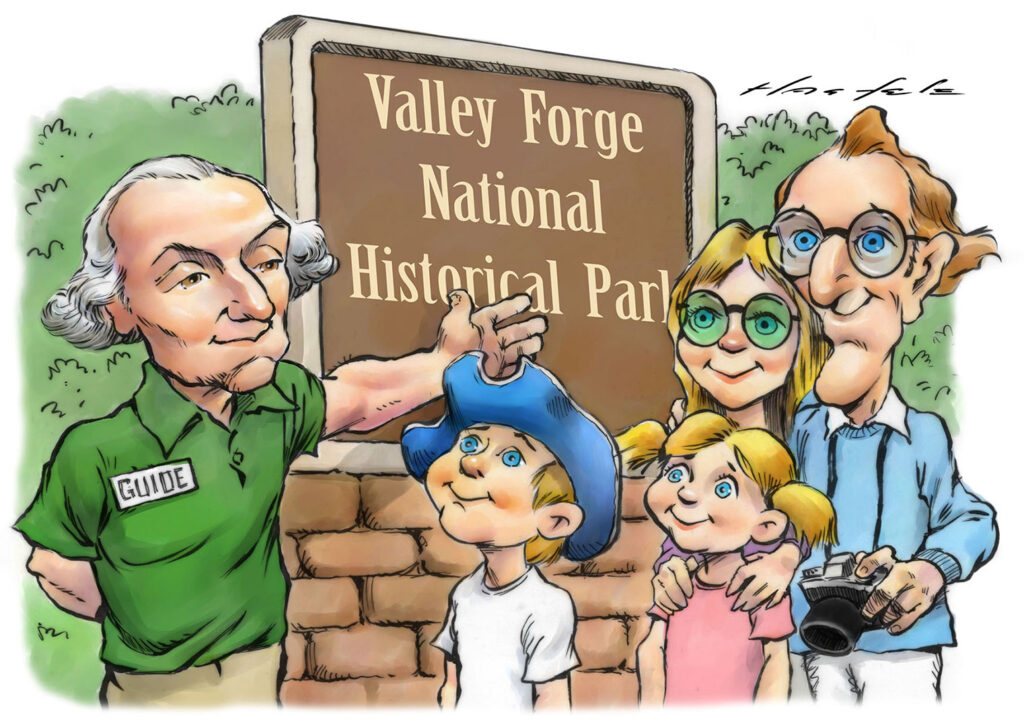
That’s when you want a tour guide, someone who knows the place intimately and can show you what there is that you can’t see or appreciate without some background. There are travel books, and some apps being developed, and I appreciate them, but the best travel guide is still a person.
In spite of many years living in greater New York, I have only begun to get to know it. Every single building has its own history. It’s infinite, and new history is being generated faster than you can catch up.
After having my fascination with American history recharged by this film, I decided to try to visit some of the places that were so significant in the history of the Revolution. Using the film as a basis, I compiled a wish list of places in the Northeast and Middle Atlantic states where you can get a tangible sense of some of the places where the Revolution took place.
This is a drop in the bucket, but these could be points on a travel itinerary that traces Revolutionary War history. But those are just the points on which an itinerary is structured. Most of a travel experience takes place between the points on the itinerary. And certainly that was also true of the war itself. Though the history is marked by major events, the Revolution actually took place across the whole countryside. Every place and everyone were affected by it.
So, when you’re traveling around the Northeast, you know you are passing through places where the revolution took place. Even places that are unmarked and unacclaimed were places where armies marched between battle sites, or where families struggled to live under the conditions of war, and where so many stories of that history played out.
Much of it we will never know, except in our dreams. As we explore the highways of America, those are the mysteries of the silent, but knowing landscape.
Bon Voyage!
Your humble reporter,
A. Colin Treadwell
The post Discovering History in My Backyard appeared first on The Taucker Travel Blog.