
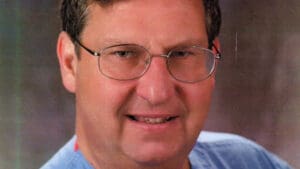
Raised by immigrant parents who valued faith, discipline, and service, Dr. Baumgartner developed an early interest in medicine after a serious illness in his family. He went on to graduate Summa Cum Laude in Biology from Loyola Marymount University, earning the Karl Kadner Biology Award. He later completed his MD at UCLA School of Medicine, followed by surgical training at Harbor-UCLA and a cardiothoracic fellowship at the University of British Columbia.
In the mid-1990s, he served as Acting Head of the Division of Cardiothoracic Surgery at Harbor-UCLA Medical Center. There, he led complex surgical cases, including advanced cardiac procedures and high-risk trauma operations. His work in a county hospital setting exposed him to some of the most severe and advanced disease presentations.
Alongside his clinical work, Dr. Baumgartner has built a strong reputation in education. He has trained residents, fellows, and physician assistants, and received Preceptor of the Year honours in 2022. He also founded the Surgery 101 Technical Skills Boot Camp, offering a practical introduction to surgery for students.
His academic work focuses on the Hippocratic Oath and medical ethics. He continues to advocate for a patient-first approach, grounded in both science and moral responsibility.
I was about nine years old. My mother became very ill during pregnancy. I remember thinking that I wanted to help people like her. I made a promise to myself that I would spend my life helping the sick. That decision stayed with me.
My parents were immigrants. My mother grew up during the war in Germany. She told us stories about fear and survival. Faith was very important in our home. We were not wealthy, but we had strong values. That shaped how I see medicine. It is about service, not status.
The intensity. At Harbor-UCLA, you see advanced disease and serious trauma. Patients often come in late. You have to act quickly and make difficult decisions. It forces you to focus on what matters most.
It was demanding. We handled complex cardiac and thoracic cases daily. Aortic dissections, bypass surgeries, lung cancer resections. You are responsible for outcomes and for leading the team. It teaches discipline and clarity.
One was a patient with a gunshot wound to the pulmonary hilus. That injury is often fatal. We were able to save the patient with a trauma pneumonectomy. It required quick thinking and teamwork. Those moments stay with you.
I led the cardiac surgery programme at the Wadsworth VA for a period. I also directed a thoracoscopic surgery training programme. It was a chance to help develop surgical techniques and teach others.
Medicine is passed down. You learn from those before you, and you teach those after you. I have worked with residents, fellows, and physician assistant students for many years. Teaching keeps you sharp and grounded.
I wanted to make surgery more accessible to students. Many programmes start with theory. I reversed it. Students learn hands-on skills first. That builds excitement. Then they are more engaged with the science behind it.
It defines the purpose of medicine. It reminds us that the patient comes first. Modern systems can become complex. The Oath brings clarity. It is a moral anchor.
They are not in conflict. Truth is consistent. Science explains how things work. Faith helps guide why we do what we do. In medicine, both are important.
Stay focused on the patient. Learn your craft well. Work hard. But do not lose sight of why you chose medicine. That purpose will guide you through difficult moments.
Read more:
A Conversation with Dr. Fritz Baumgartner on Surgery and Values