
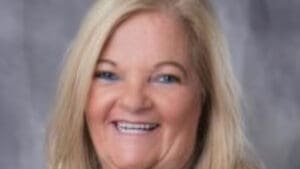
From emergency departments to senior executive roles, she has led with a singular conviction: results matter more than rhetoric.
“I define success by patient outcomes,” she says. “If patients do better and teams grow stronger, then the leadership is working.”
That philosophy has guided her ascent through clinical practice, hospital operations, and executive leadership across complex healthcare systems.
Born in Brooklyn and raised in Sussex County, New Jersey, Denise grew up in a home shaped by discipline, service, and resilience. Her father served in the U.S. Navy, and later worked for Con Edison in New York. His passing at age 47 placed early responsibility on her shoulders as the eldest of four children — a formative experience that taught her to lead long before she held a formal title.
In 1986, she joined the United States Marine Corps, serving until 1992 and achieving the rank of Corporal. The Marine Corps instilled the principles that continue to define her leadership: focus under pressure, accountability in all circumstances, and the expectation that leaders set the standard.
“Becoming a Marine taught me how to stay focused under pressure,” she says. “It also taught me that leadership means accountability, even when the situation is uncomfortable.”
After completing her military service, Denise pursued nursing, earning her BSN from Rutgers University and later her MSN from South University in Savannah, Georgia. She began her clinical career in emergency and critical care — settings where hesitation is costly and clarity is essential.
“In emergency care, you don’t have the luxury of hesitation,” she says. “You learn how to listen quickly, assess clearly, and act with confidence.”
These early experiences shaped her leadership instincts and built her comfort operating in uncertainty — a skill that would later prove invaluable in executive roles.
Denise’s leadership trajectory reflects steady, intentional growth. She advanced from Assistant Director to Director, then to Vice President of Patient Care, ultimately serving as Chief Nursing Officer and Chief Operating Officer across multiple hospital systems.
Her portfolio expanded to include:
Through every role, her priorities remained consistent: patient safety, workforce development, and clear, realistic expectations.
“I’ve learned that leadership only works when goals are realistic and clearly communicated,” she says. “People perform better when they understand both the objective and the reason behind it.”
A notable example of her adaptive leadership came during the implementation of a tele‑sitter monitoring system. When initial resistance slowed progress, she recalibrated her approach, engaged the team in the data, and ultimately achieved the intended safety outcomes.
Denise’s leadership has been tested in moments of national and personal crisis. After September 11, she volunteered to provide care for workers at the World Trade Center, later earning recognition from The Joint Commission.
In 2015, she faced a profound personal challenge when her home was destroyed in a fire. At the time, she was raising three children as a single parent while managing senior leadership responsibilities.
“That experience forced me to reassess priorities,” she says. “I learned how important balance is if you want to stay effective over the long term.”
This understanding later shaped how she supported her own leadership teams, emphasizing sustainability, resilience, and respect for personal obligations.
A defining hallmark of Denise’s career is her commitment to developing talent from within. She believes strong healthcare organizations are built through intentional mentorship, not constant turnover.
“All of my leadership roles were filled from within,” she says. “When you invest in people, they invest back into the organization.”
Her mentorship has changed lives. One example: a single mother working multiple jobs whom Denise helped transition into a unit secretary role. With Denise’s encouragement, she later pursued nursing school and ultimately became a critical care nurse.
“That’s the kind of outcome that stays with you,” Denise says. “It’s not just about filling positions. It’s about changing lives.”
Denise does not measure success by titles or accolades. She measures it by the strength, stability, and performance of the teams she leaves behind.
“I know I’ve done my job when the team can succeed without me,” she says.
Throughout her career, she has sought feedback, pursued continuous learning, and held herself to the same standards she expects of others.
“Leadership requires honesty with yourself,” she says. “If you stop learning, you stop being effective.”
Today, Denise remains focused on executive and administrative leadership roles where judgment, experience, and credibility are essential. Her leadership style is defined by:
“If a leader has a personal obligation, we respect it,” she says. “People do their best work when they are supported as whole individuals.”
Denise Kvapil’s career reflects leadership forged in service, tested in crisis, and proven through outcomes that endure. Her approach blends operational discipline with human‑centered leadership — a combination that strengthens teams, elevates performance, and drives sustainable results across complex healthcare environments.
Read more:
Denise Kvapil: Leadership Forged in High‑Stakes Healthcare