
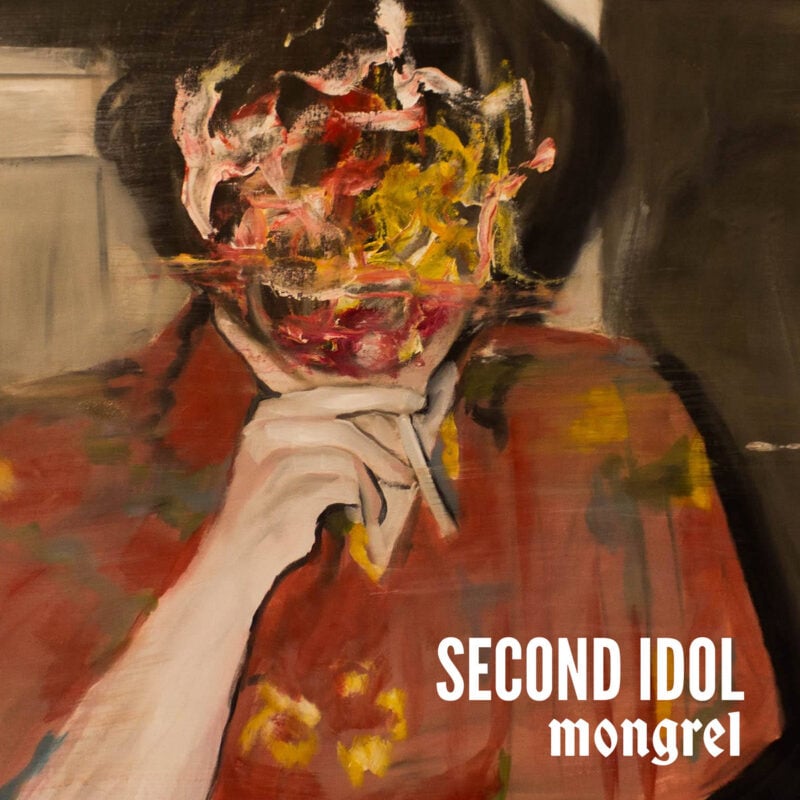
There is an electricity to Second Idol’s Mongrel that flickers like a body remembering its earliest bruises — not to shrink from them, but to rise taller in spite of every mark. One of the most compelling acts emerging from Australia’s alternative world, Second Idol delivers a debut album charged by identity, inheritance, and the tension of living between worlds. There is conviction here, but also curiosity; tenderness, but also a blade. Each track feels pressed together from many histories until something jagged and bright begins to take shape — a record that studies belonging with equal parts honesty and heat.
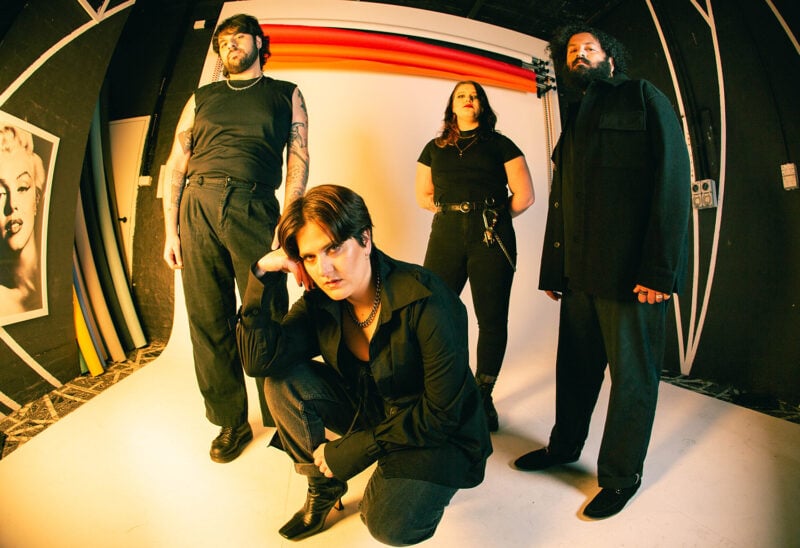
The quartet — Kate Farquharson, Theia Joyeaux, Sunny Josan, and Afeef Iqbal — move with the shared voltage of second-generation Australians whose lived experiences crackle beneath every verse. Their cultural lineages, their queerness, their personal histories: none of these are adornments. They are the engine. To hear Mongrel is to hear people disentangling the threads between self and society, then knotting them back together into a shape that finally feels like home.
Produced, mixed, and mastered by Clayton Segelov with engineering by Angie Watson at The Brain Studios in Sydney, the album is sharp-edged and deliberate. It reaches toward feminism, gender politics, postcolonial tension, diaspora, desire, heartbreak, and the relentless undertow of a country confronting its own fractures.
Alongside previewing the album, Second Idol opened up to Post-Punk.com about the forces shaping each of Mongrel’s songs—their full track-by-track breakdown — paired with our impressions and vocalist/guitarist Kate Farquharson’s deeper insights into the songs.
Silicone Maggot
The album begins with a rush of unease: a deep, fuzz-drenched bassline setting an ominous undertow while the vocals arrive taut and wary, like a warning in the half-light. As the tension builds, rhythmic psychedelic guitars curl around the voice, each line cutting through the mix like a whispered threat.
The band describes “Silicone Maggot” as a study in imposter syndrome — that chest-tightening moment when you walk into a room and instantly feel out of place. Yet the track arcs toward empowerment rather than defeat.
Expanding on this, Kate speaks of the “deep twisting feeling in your gut” that convinces you you don’t belong, comparing it to imagined “maggots wriggling,” a false narrative planted by anxiety. She emphasizes the song ultimately reclaims space: “You DO belong here. You NEED to be here. You deserve to take up space.”
Boxing Ring
“Boxing Ring” lands with the crack of a storm. The guitar’s drone pulls taut like the ropes of a ring, while the rhythm section bounces with the lightness of footwork before the fight. Vocals slice in sharp and punk-edged, cutting through a melody that circles overhead like weather threatening to break. Angular guitar strikes fall like icy rain as tension gathers.
The band frames it as an anthem for women and gender-diverse musicians — a rebuttal to tokenism and the industry’s habit of turning solidarity into spectacle. Its message burns clean and fierce.
For Kate Farquharson, the metaphor is painfully literal. She describes the industry as “a circus” where artists are pedestalized, undermined, or “led to slaughter” for speaking up. The track channels that tension into refusal — a declaration of solidarity forged against the grind.
Postcolonial Blues
A slow, deliberate drumline marches the song forward with generational weight. Guitars flicker at the edges while the vocals smoke and seethe, slipping into punk sneers that crack the stillness. Two minutes in, the track explodes into shoegaze-thick distortion — a punch of catharsis that retreats and resurges like memory itself.
The band explains that “Postcolonial Blues” wrestles with the complexities of being Australian while rooted in Sri Lankan and Scottish lineage. It draws from Farquharson’s upbringing in Kempsey, where racism and belonging shaped her earliest sense of self.
Speaking with visceral specificity, Kate recalls writing the song while staring at a 1960s photo of her aunty and grandfather in Colombo. From that image unfurled questions of colonial legacy and national identity, intensified by Australia’s 2023 “No” vote rejecting the Indigenous Voice. “How do I navigate this world as a postcolonial being?” she asks. The song inhabits these questions rather than resolving them.
Spineless Wonders
“Spineless Wonders” shifts the album into colder terrain. A thick, old-school post-punk bassline takes the lead, steady and bruised, while quivering coldwave guitars lace a frozen gothic melody. The mantra “It doesn’t matter to me” hangs with unsettling resignation before the title’s refrain hits like a whispered insult across a dim room.
The band says the track grew out of a sinuous jam session that evolved into a critique of political cowardice. Power, corruption, and moral vacancy slither at its core.
Kate calls it “a gothic painting of power, corruption and lies,” with the titular “spineless wonder” representing politicians and abusers of authority who “wander/wonder free.” Her lyrics twist through the arrangement like a blade.
The Harbinger
A thick, resonant snare opens the track like a door slammed in warning before the vocals seize the room with clarity. A repeated “oh” softens the blow, letting the song spill into a tempest of early-’90s alt-rock and shoegaze — guitars swirling with longing and restraint. The melancholy lingers like thunder refusing to break.
The band describes the song as a meditation on broken promises — friendships that fade, abandonments that leave quiet devastation in their wake.
In her notes, Kate writes of longing for honesty amid exhaustion: “You’re tender and you’re tired but you’re looking for glimmers of hope.” She closes the song with a vow to live truthfully: “Live a little for me. Save a little for me.”
Third Culture Kids
Charging forward with restless urgency, “Third Culture Kids” pairs rapid drums with fuzz-thick bass, its teeth bared in a satirical snarl. The line “nowhere ever feels like home” lands with a sting sharpened by humor — half-wound, half-joke.
Second Idol calls it their “POC rage song,” built on a tension between no-wave chaos and punk precision.
For Kate, the song cuts close to the bone. She recalls hearing the taunt “You flew here, we grew here” as a child — a weaponized reminder that belonging is conditional. The track examines the pressure to assimilate, the ache of carrying multiple identities, and the sense of being split across borders both visible and invisible.
Little Girl
A gentle, stabbing melody guides “Little Girl,” with guitars strumming like piano chords — soft but deliberate. Beneath this, post-punk bass and guitar shift subtly while the refrain “my little girl” carries the wistful ache of addressing a younger self frozen in memory.
The band describes it as a letter to childhood — a reflection on femininity, identity, and the strange magic of escaping into imagination.
Kate paints that world vividly: the jewelry box with its spinning ballerina, smocked dresses sewn by her mother, dancing to Strictly Ballroom, the crooked charm of Fantasy Glades. The song became a way to soothe old wounds — a return to a self left waiting.
Dear X (Bonus Track)
“Dear X” gathers everything — confession, ache, and catharsis — into one final storm. It swells like a cathedral filled with climbing voices, guitars swirling between shoegaze haze and metallic collision before settling into a pulse-driven groove. The song rises and falls in waves, each surge carving deeper into the emotional terrain beneath.
Originally released in 2022 and remastered for this album, the band call it a “tsunami of sound” reflecting emotional illiteracy and fractured relationships.
Kate describes it as an overwhelming outpouring of everything unspoken — a flood of words that never found release until now.
Ultimately, Mongrel is an album that feels lived-in — stitched from the fragments we inherit, the names we drag behind us, the grief we learn to outgrow, and the ugliness we grit our teeth through. Second Idol never sermonizes or sand down the edges. Instead, they lay every shard on the table, let it hum with heat and sorrow, and refuse to shrink from its complexity. It’s a debut that stands tall inside its contradictions, its histories, and its hungry determination to keep going.
Order the album here and here, and listen below:
Second Idol Live shows:
Follow Second Idol:
The post Sydney’s Second Idol Traces the Fault Lines of Heritage and Hurt on Their Debut LP “Mongrel” (Track by Track Review) appeared first on Post-Punk.com.